Discover how Camp Subira courtesy of Sonia Nabeta Foundation and Kenya Diabetes Management and Information Center (DMI)
Marsabit is transforming Type 1 Diabetes care for children in Kenya through combining mental health support, peer education, and culturally sensitive diabetes management.
Beyond Insulin: What Camp Subira Marsabit Taught Us About Holistic Type 1 Diabetes Care
When most people think of Marsabit, they picture the Chalbi Desert, dry, remote, and scorching. But Marsabit town is different: a highland forest, cooler temperatures, and a community navigating challenges that most diabetes care guidelines never account for.
Here’s why that matters for Type 1 Diabetes (T1D) management: insulin must be stored between 2°C and 8°C, and once in use, it should not exceed room temperature for more than 28 days. Now imagine a child who has no refrigerator, lives over 300 kilometres from the nearest insulin supply, and must traverse multiple landscapes and temperature extremes just to access their life-saving medication.
This is the reality that Camp Subira Marsabit was designed to face, and so much more.
What Is Camp Subira? A Safe Space for Children Living with Type 1 Diabetes
Camp Subira was a 5 day camp dedicated to children and adolescents living with Type 1 Diabetes in Kenya. A space of connection, learning, healing, and hope, one that confronts the dimensions of diabetes care that clinical settings often overlook.
From insulin access in remote regions to the psychological weight of living with a chronic illness, Camp Subira brought the full picture of T1D into focus.
Culturally Sensitive Mental Health Support for Children with Diabetes
One of the most profound elements of the camp was the integration of culturally sensitive mental health care.
Language barriers meant that psychological tools and assessments had to be carefully translated ;not word for word, but meaning for meaning. Because mental health support for children with diabetes only works when it is genuinely understood, culturally accepted, and emotionally felt.
It is not just about asking the right questions. It is about asking them in a way that resonates within a child’s cultural world.
The Physical Side of Diabetes That No One Talks About
Two topics came up at camp that rarely enter clinical conversations:
- Dressing and clothing choices affecting injection sites
- Fear of marriage or relationships because of living with diabetes
These are not minor concerns. They shape how young people see themselves and their futures.
We also explored the practical realities of injection technique — specifically how improper methods can lead to lipohypertrophy (lumps and bumps under the skin) or hyperpigmentation (dark spots) at injection sites. For adolescents especially, these physical changes carry a significant emotional weight, affecting body image and self-esteem in ways that go far beyond blood sugar levels.
Diabetes Education Through Play, Art, and Creativity
Children do not learn best by being lectured to. They learn by doing, feeling, and expressing.
At Camp Subira, diabetes education came alive through:
- Games and interactive activities that made learning engaging
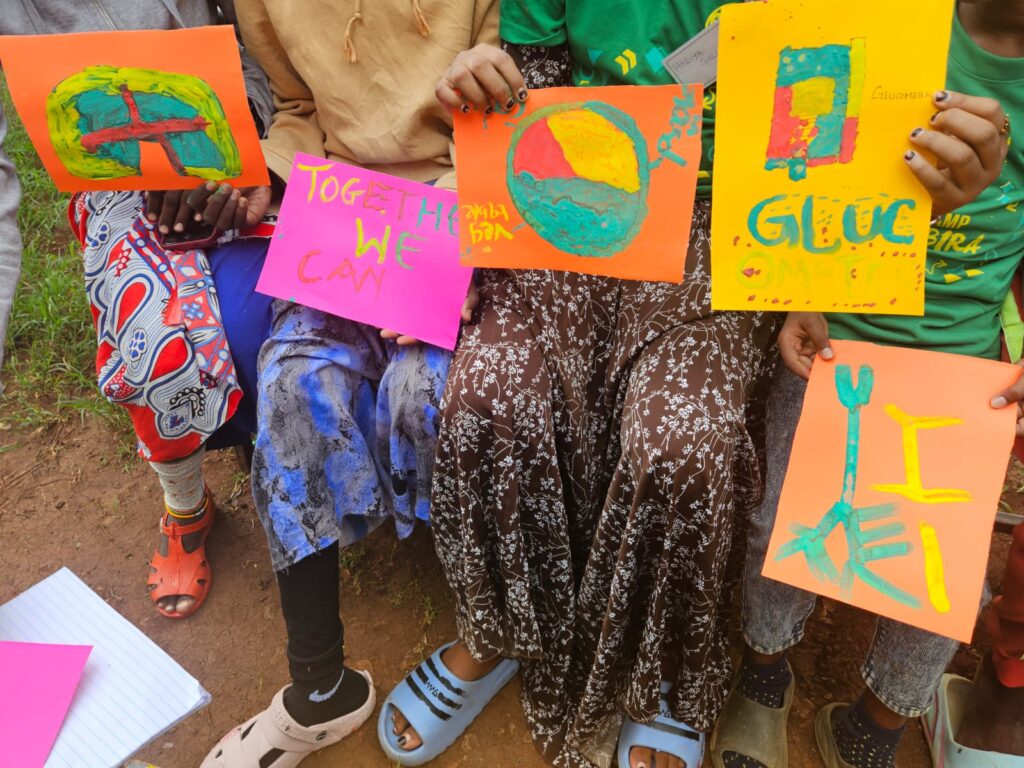
- Art and play therapy to help children process complex emotions
- Poems, skits, and dances created by the children themselves about their own experiences with diabetes
In these moments, diabetes stopped feeling like a burden and became something young people could own, shape, and even celebrate.
The Power of Peer Education in T1D Management
There is something uniquely powerful about learning from someone who truly understands your experience.
Through structured peer education at Camp Subira, campers shared personal stories, built practical coping strategies, and perhaps most importantly, discovered they were not alone. The message shifted from “you have this condition” to “we are in this together.”
This sense of community is not a bonus in diabetes care. For young people managing a lifelong condition, it is essential.
Mentorship as a Model for Living Well with Type 1 Diabetes
Mentorship was a cornerstone of the camp’s approach. Older youth and experienced facilitators walked alongside younger campers not simply as instructors, but as living proof that a full, meaningful life with T1D is possible.
Sometimes the most powerful message is not spoken. It is seen.
A Multidisciplinary Team: Because Diabetes Is Never Just Medical
Camp Subira brought together healthcare providers, mental health professionals, educators, and peer mentors under one roof. This multidisciplinary model ensured that care was holistic, integrated, and truly person-centred.
Managing Type 1 Diabetes is not only a medical challenge. It is an emotional, social, and psychological one and care must reflect that reality.
Group Therapy and Healing in Community
Structured group therapy sessions created safe spaces where children could:
- Voice their fears and frustrations without judgment
- Recognise that their experiences are shared, not shameful
- Build the emotional resilience needed for long-term self-management
In these circles, vulnerability became strength. Individual stories became bridges between children who had never met, and healing became a collective experience.
What Diabetes Care Should Look Like: Lessons from Camp Subira
Camp Subira was more than a camp. It was a model.
Not just prescriptions but conversations. Not just insulin,but understanding. Not just survival but quality of life.When diabetes care is culturally sensitive, community-driven, and psychologically informed, it does not simply manage a condition. It transforms lives.
At Diapsych Limited, this is the standard we are working toward; one child, one family, one community at a time.