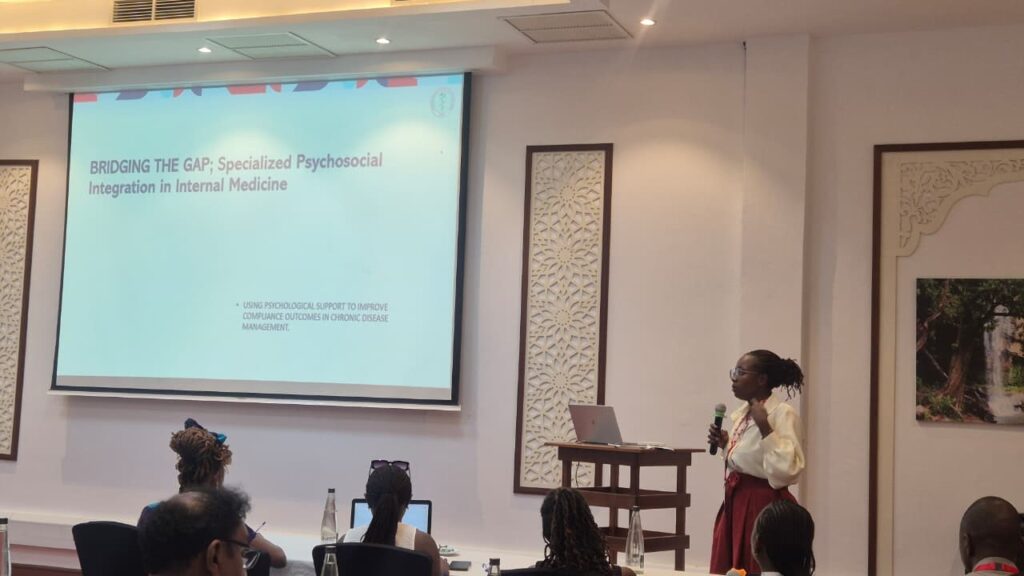
Reflections from the 29th Kenya Association of Physicians (KAP) Scientific Conference
Standing before a room of distinguished doctors at the 29th KAP Scientific Conference, one thought eclipsed my slides: medicine is only half the story. While clinical data is vital, the most profound insights don’t come from a textbook—they come from the people living with chronic conditions like diabetes. They are the ones doing “everything right” yet still struggling; the ones who are afraid to admit that, despite a stable HbA1c, they are not okay.
The Invisible Layer of Chronic Illness
- In a traditional clinical setting, the focus is often narrow: Symptoms → Diagnosis → Treatment → Management. However, there is a quieter, invisible layer to chronic disease that often goes unaddressed in 15-minute consultations. This layer is where the real battle is fought. It lives in:
- Treatment Fatigue: The sheer exhaustion of managing a condition 24/7, 365 days a year.
- Social Isolation: The child who feels “othered” at school because of their insulin pump or dietary needs.
- Caregiver Burden: The overwhelmed family member who carries the emotional weight in silence.
- Psychological Disengagement: When a patient stops showing up, not because they don’t care, but because they are burnt out.
Why We Must Integrate Mental Health into Chronic Care
The integration of mental health and chronic disease care is not just a “nice-to-have”—it is a clinical necessity. Living with a condition like diabetes involves much more than monitoring blood sugar levels; it involves navigating:
- Diabetes Burnout & Emotional Fatigue
- Identity Shifts & Body Image
- Fear of Complications
- Disordered Eating Patterns
- Resilience Building
The Risk of Misdiagnosis: When we ignore the psychological component, we risk mislabeling patients. What a clinician calls “non-compliance” is often psychological distress. What looks like “disengagement” is frequently chronic illness burnout.
Diapsych Kenya: Bridging the Gap
 At Diapsych Kenya, our mission is to inhabit the space between medical care and psychological support. The consensus at the Kenya Association of Physicians conference was clear:
Parity of Esteem: Mental health is inseparable from physical health.
Improved Outcomes: Patient recovery and stability improve significantly when emotional well-being is prioritized.
Human-Centered Evolution: Healthcare must transition from treating a “case” to caring for a human being.
Building a More Compassionate Healthcare System
Imagine a Kenyan healthcare system where emotional distress is screened for as routinely as blood pressure; where providers feel equipped to handle both the syringe and the psyche; and where caregivers are supported rather than forgotten.This is the “Whole Person” model of care we are building.
Join the Movement
Through Diapsych Kenya, our participation in the KAP Annual Scientific Conference, and every individual patient interaction, we are committed to closing the gap between the clinic and the soul.
Better care starts with seeing the whole person. Let’s build this future together.
Jane Mureu Founder, Diapsych Kenya

Hi Jane. This is great work. We support people at risk and living with chronic diseases through health coaching in making healthy lifestyle changes that give their bodies better fighting chances. As you know, most of these conditions are lifestyle related – food, physical activity, environment and behaviour.
Thank you Kithinji